Growth
Build leadership leverage
Delegate, strengthen teams and make sound decisions without sending everything upward.
Leadership development should change how the business is led.
Ingenium designs development around the work leaders are responsible for—the decisions they must make, the conversations they avoid, the teams they lead and the results the organization needs from them.
A program can be engaging, well received and quickly forgotten. The harder question is what leaders do differently after it ends.
Most leaders have already heard about accountability, communication, delegation and strategic thinking. They may understand the ideas and still struggle to apply them when a decision is unpopular, the team is under pressure or the business has little room for error.
Content is delivered. Participants return to work. The systems, expectations and habits around them remain unchanged.
With the leadership the organization actually needs—and the conditions in which it must be practiced.
What is the organization trying to accomplish, and what must its leaders become better at for that to happen?
Delegate, strengthen teams and make sound decisions without sending everything upward.
Lead people through change while the answer is still evolving.
Help strong functional leaders prepare for wider organizational responsibility.
A first-time manager and a senior executive should not be taught the same version of leadership.
Content, format and pace are shaped around the audience, business context, current situations, culture, available time and the outcomes the sponsor needs to see.
Preparing to take on greater responsibility, lead others and think beyond the current role.
Creating clarity, accountability and development through the work—not around it.
Moving beyond functional success to influence and decide across the enterprise.
Improving direction, conflict, decision-making and how the organization is led together.
The program should fit the organization—not ask the organization to fit the program. Customization means removing what does not belong.
Capabilities are combined around the situations leaders must handle—not presented as isolated modules by default.
Leaders learn more when the work is already theirs. Development becomes useful when ideas are applied to decisions and conversations happening now.
A stalled decision, a difficult conversation, a team under pressure or a current organizational priority.
Practice feedback, build an action plan, examine the decision or try a new approach between sessions.
Discuss what happened, what the leader learned and what the next situation now requires.
Learning moves from an event to a disciplined cycle of action, reflection and adjustment.
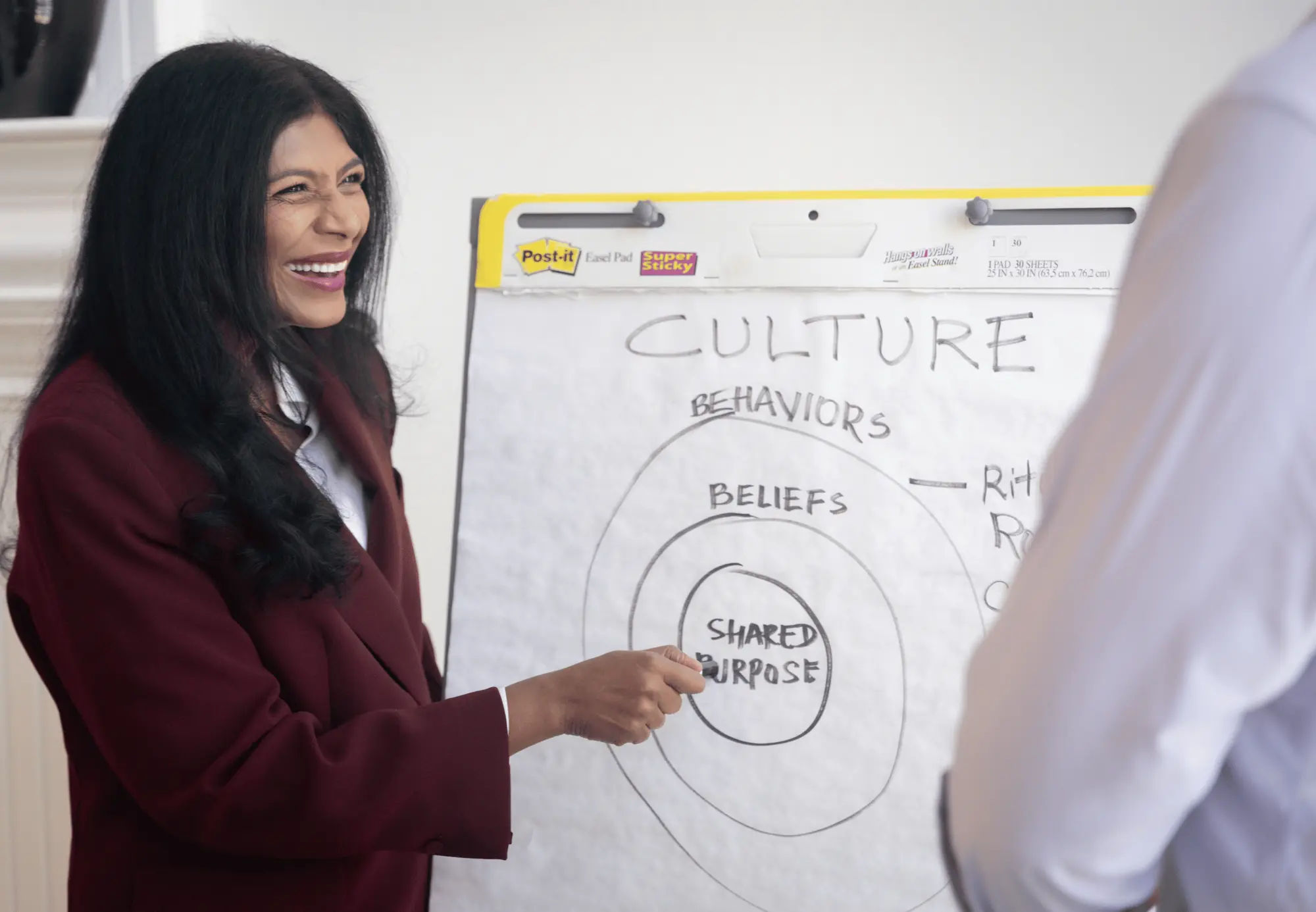
Every element of the experience is chosen around what should be different at the end of the work.
Learn what is changing, what leaders must deliver and where capability is falling short.
Agree with the sponsor what should be different when the work ends.
Design around the people who can influence the outcome—not simply a title or level.
Select content, assessment, workshops, projects, coaching and facilitation around the need.
Apply the ideas to live leadership and business situations.
Use follow-up, manager involvement, coaching or other support so learning survives.
Examine what changed, what did not and what the organization should do next.
Not every leadership challenge requires a workshop. The engagement may combine several methods—or use one focused intervention.
Shared learning, discussion and practical application.
Learning together over time and applying between sessions.
Priorities, relationships, decisions and shared expectations.
A more objective and self-aware starting point.
Support around situations emerging from the program.
Develop leadership while solving a real organizational problem.
Help leaders and talent teams carry the work forward.
Build leadership across levels, functions or geographies.
A leader can return from a strong program to a system that rewards the old behavior.
while every important decision continues to be escalated.
while only individual results are rewarded.
while failed experiments are punished harshly.
Where needed, Ingenium looks beyond the program to roles, decision rights, performance expectations, succession, talent systems and how senior leaders reinforce the behavior they say they want.
Sandhya has spent her career on both sides of the work—as an advisor designing leadership initiatives and as an executive leading talent, engagement, capability building and HR inside global organizations.
That experience brings an understanding of what sponsors need, what participants experience and what makes a program difficult to sustain once the consultants leave.
Meet Sandhya Johnson →A positive reaction is useful. It is not the final measure. Evaluation should return to the reason the work began.
Changes in leadership behavior
Participant and manager feedback
Progress against development priorities
Readiness for larger roles and succession depth
Team effectiveness, delegation and accountability
Faster or clearer decisions
Application to business priorities
Retention, engagement or relevant business outcomes
Emerging and senior leaders · Executive and leadership teams · Women leaders · Cross-functional and global teams · Individual effectiveness · Leadership assessment · Coaching · Organizational capability · Talent and succession systems · Multi-year development efforts
Yes. The work is designed around the organization, audience, business context and capabilities being developed.
Emerging leaders, people managers, senior leaders, executive teams or mixed leadership cohorts.
Yes. Assessment may strengthen self-awareness and focus development when it supports the engagement’s purpose.
Yes. The work may involve facilitation, team effectiveness, assessment, coaching or a combination of methods.
Duration depends on the outcomes, audience and delivery model—from a focused intervention to a multi-year initiative.
Measures are agreed around the original need and may include behavior change, capability, succession readiness, team performance or business outcomes.
Yes. An existing internal program can be reviewed, strengthened or redesigned rather than replaced automatically.
Tell us what the organization is trying to accomplish, where leadership capability is falling short and who needs to be part of the work.